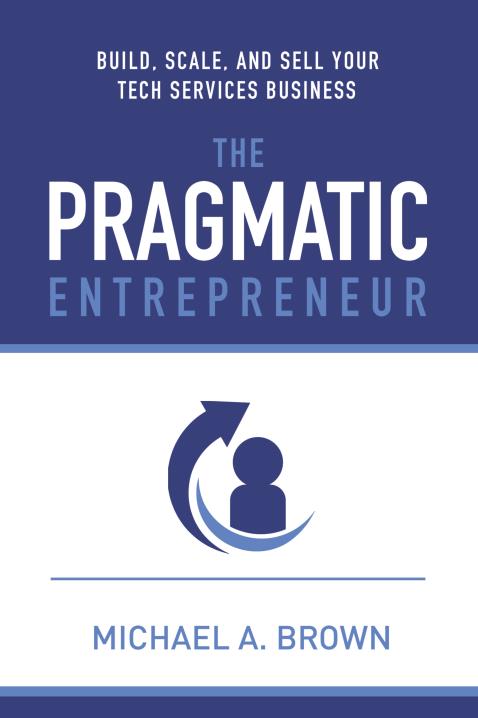


- Genre:business & economics
- Sub-genre:Entrepreneurship
- Language:English
- Pages:368
- eBook ISBN:9781835566473
- Hardcover ISBN:9781835566466
Book details
Overview
Ever wanted to start your own technology services company but weren't sure where to begin? What about building it - and eventually selling it - to a strategic or financial buyer?
In 'The Pragmatic Entrepreneur', founder and author Michael A. Brown draws on two decades of experience to offer a clear, practical roadmap for building, scaling, and running a successful business. He walks you through each stage of a company's lifecycle, from startup to exit, while exploring the psychological realities of entrepreneurship - what it truly means to build something from the ground up, and how to sell it without losing yourself in the process.
Whether you're launching your first venture, or preparing for growth and acquisition, 'The Pragmatic Entrepreneur' is your guide through every step of the journey.
Description
Building, growing, and selling a technology services business takes years, not months, and the ideas behind doing it well are often closely guarded secrets held by business owners and private equity firms. 'The Pragmatic Entrepreneur' opens that knowledge up.
Drawing on 15 years of founding and growing companies across various industries, and his work with investment bankers and private equity (PE) firms as a mergers and acquisitions (M&A) consultant, Michael A. Brown shares what actually works, and what doesn't, in technology services and Software as a Service (SaaS) businesses. He has seen firsthand how companies either organize and execute their models successfully or fail and eventually disappear.
This book is for anyone considering starting a technology services business, anyone already growing one, or anyone in sales or technical roles thinking about building something of their own. It is pragmatic by design, offering practical tools and insights readers can implement immediately, along with honest reflections on what the author did well and what could have been improved. It illustrates how decisions made during business growth can realistically impact entrepreneurs, their co-founders, employees, and even their personal lives.