
About the Author
Anthony Adoré
Author Info
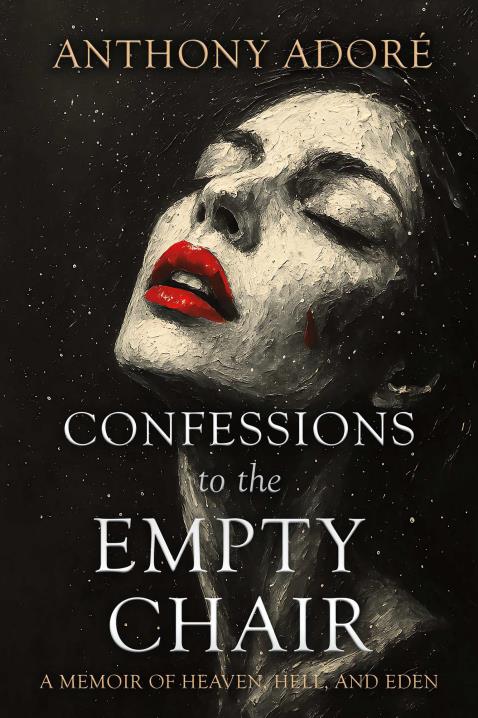
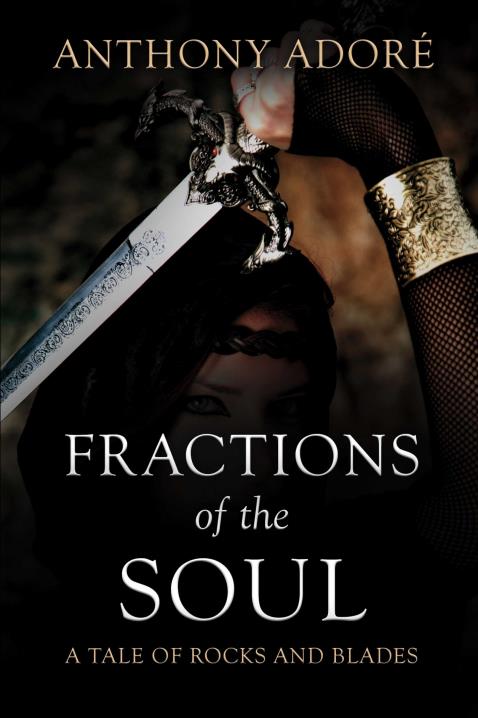
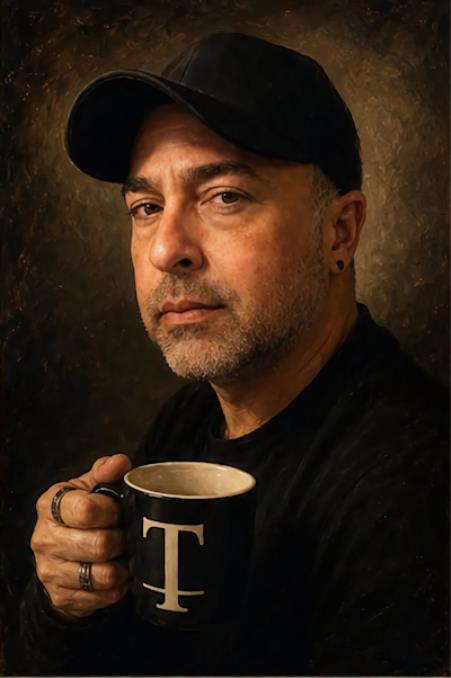
Anthony Adoré, also written Anthony Adore, is an American memoirist and essayist from West Texas. He is the author of Confessions to the Empty Chair and Fractions of the Soul. His dark, introspective Catholic writing explores faith, desire, grief, memory, and the divided self.
A memoirist and essayist from West Texas, he treats the interior life as contested ground: the soul as both battlefield and sanctuary, where the pull toward holiness and the pull of instinct inhabit the same body at once. He refuses to soften darkness, yet never surrenders to it — he steps into it deliberately, asking what remains of a person after love, sin, memory, and grace have each taken their turn.
At the center of his work is a single, patient conviction he calls post-Edenic ontology: that human loneliness is not a modern affliction or a private failing but the oldest inheritance of all. Before the Fall, before any sin, Adam was already alone — his solitude original and God-given, a clean ache for communion woven into him at creation. When God answered that ache by fashioning Eve not from separate dust but from Adam himself, the same longing passed into her, so that man and woman have carried one loneliness between them from the very beginning: two halves reaching for a wholeness they can still remember but no longer hold.
Then sin marred the ache. What had been a pure hunger for God and for one another curdled into exile — Adam's isolation, Eve's turning inward — and every descendant of that first couple now inherits the wound rather than the innocence: a loneliness that still reaches for union yet is fogged, self-protective, and prone to make idols of the very people meant to ease it. Adoré reads all of it — desire, faith, grief, the failures of love — as expressions of this one post-Edenic ache to be made room for. It is why, in his telling, two people grow closer not by making each other their ultimate ground, the original Edenic mistake endlessly repeated, but only by turning — together and separately — toward something higher than themselves.
His pen name joins the engraver Gustave Doré — who illustrated Dante, Milton, and Scripture — to the act of spiritual adoration, and the pairing maps the work itself: gothic moral architecture rendered with devotional seriousness and clinical precision. Trained in psychology (University of Dallas; University of Texas of the Permian Basin), he writes as a self-described "scientist of the soul," reading human behavior for the frameworks beneath it while keeping faith with mystery. He writes in conscious continuity with the "wisdom of the dead" — Pascal's tension between reason and heart, Boethius's consolation within suffering, the moral cosmos of Milton and Dante, and the relentless questioning of Socrates.
He is the author of two companion books. Confessions to the Empty Chair: A Memoir of Heaven, Hell, and Eden traces a life marked in childhood by spiritual violation and interrupted, again and again, by a God who will not stay silent — a fall and a slow return, read through the archetype of Paradise Lost. Fractions of the Soul: A Tale of Rocks and Blades turns that same unflinching eye on desire and relationship, following the post-Edenic ache into the dynamics between men and women and arguing, through the figures of "whetstones" and "blades," that two people grow close only by ascending, independently, toward something higher than each other. One furnishes the language; the other, the lived witness.
His prose fuses confession with confrontation in a cadence that is almost liturgical, where recurring images — chairs, flames, wounds, silence — carry revelation rather than ornament. He writes for those who sense that every relationship carries spiritual consequence and every wound demands resolution, as either wisdom or poison — and, above all, for his heirs and the brokenhearted, offering his life not as a model of perfection but as a map of the minefield.
News
Visit the Author's Blog
- anthonyadore.com