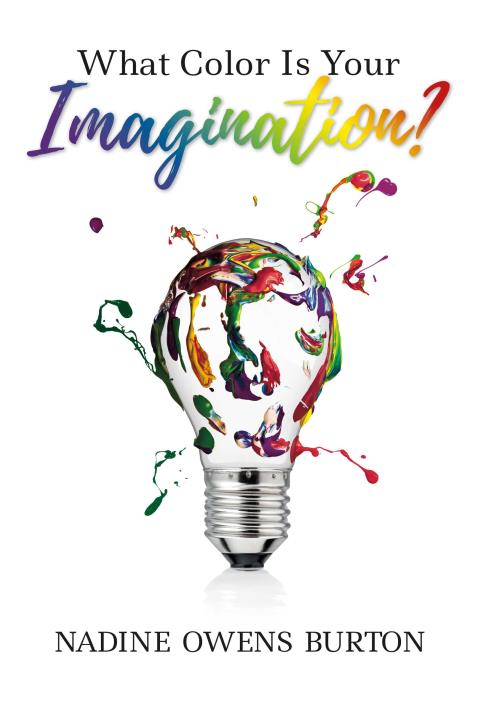


- Genre:children's nonfiction
- Sub-genre:Inspirational & Personal Growth
- Age Range (years):3 - 8
- Language:English
- Pages:44
- Hardcover ISBN:9798317846923
Book details
Overview
In the original book . . . What Color Is Your Imagination? starts with a metaphor using color symbolism to describe the types of imagination and creative environments in which problem-solving occurs and then delves into ways we can improve our problem-solving skills and produce our own Purple Imagination.
Now the author is placing the lessons of What Color Is Your Imagination? into a children's book. It is actually very apropos because the theme was inspired by a young child. . . her then four-year-old son Andrew. Andrew is now the illustrator of the children's version.
Every child has a superpower: imagination.
What Color Is Your Imagination? invites children to explore the many "colors" of creative thinking—from brave yellow and thoughtful blue to caring red and inventive purple. This uplifting book encourages curiosity, problem-solving, teamwork, resilience, and the joy of dreaming big.
Read moreDescription
What Color Is Your Imagination? is an inspiring children's book that helps young readers discover imagination as a superpower. Through colorful metaphors, playful language, and child-friendly lessons, the book explores how curiosity, courage, feelings, facts, teamwork, mistakes, and big ideas all work together to help children create, solve problems, and dream in bright new ways.
What Color Is Your Imagination? was inspired by a conversation with the author's then four-year-old son, Andrew. His question and subsequent declaration about the color of his imagination developed into an inspirational speech for her Head Start program staff. More than a decade later, and several presentations of the theme as a workshop and keynote for various Owens Burton Consulting clients, the lessons on creative problem-solving were put into a book in 2019.
What Color Is Your Imagination? includes a metaphor where the types of problem-solving behaviors and environments are represented by an assortment of colors. For example, Yellow Imagination is the "we've always done it that way" type of imagination, or the imagination of fear. Green Imagination sees creativity as a commodity to be traded and, therefore, is highly impacted by personal motivation and incentives. White Imagination is the implementation of the creativity of others and is therefore not as "vivid" and "vibrant," is less impactful than original ideas. Black Imagination is what we would call the "mad genius" type of imagination. Those exhibiting this type of imagination are the ones about whom we usually say, "If they would only use their powers for good."
The ideal is Purple Imagination. It is a combination of Red Imagination and Blue Imagination. If we take Red Imagination (love, passion, and enthusiasm) and combined it with Blue Imagination (analytics, statistics, and empiricism) we get Purple Imagination: a synergistic, almost exponentially beneficial relationship where innovation and invention can occur.
Then, the second half of the book gives the reader ten ways to increase their chances of creating their own Purple Imagination.
Now, more than 20 years after that initial conversation, Nadine Owens Burton is working with Andrew, as the illustrator, to create the children's version of the theme.
Read more