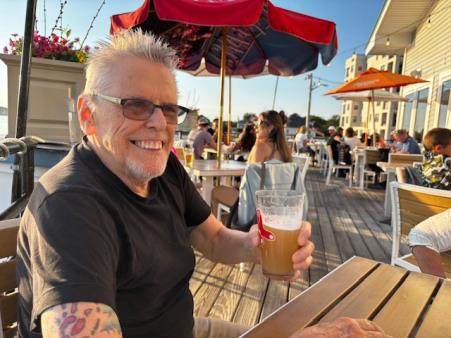
Stephen the author
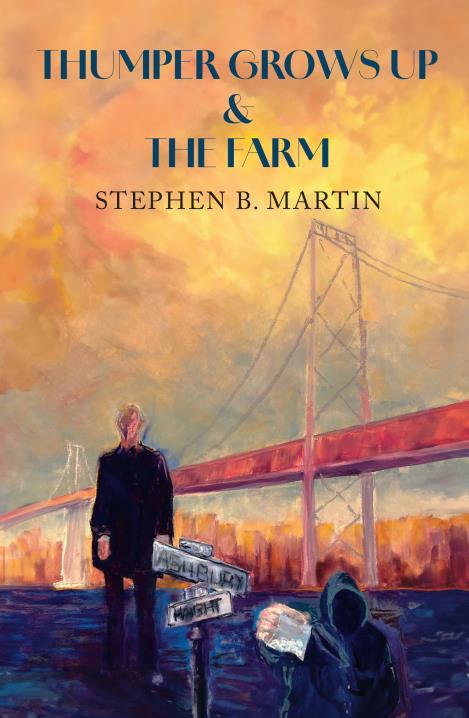
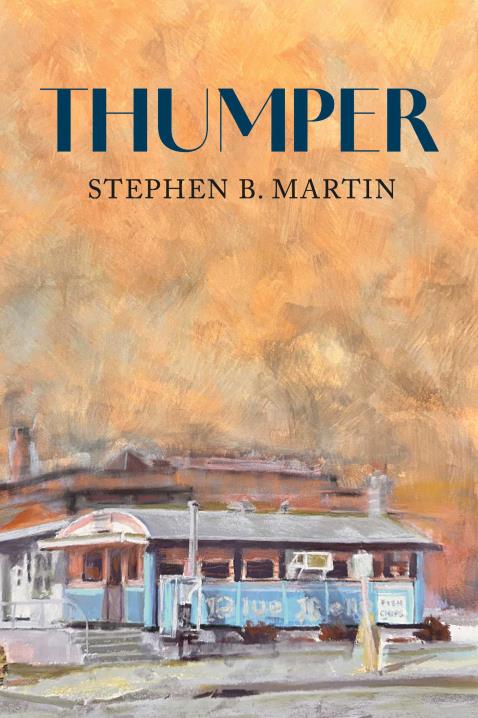
In 2024, Stephen published his first novel, Thumper. And his second, Thumper Grows Up and The Farm (a grittier sequel) is now available.
Norman Schell, of Clean Living fame, wrote “Stephen Martin's writing of Thumper and the upcoming Thumper Grows Up are an important literary contribution to the history of Worcester's working class and its art and music culture. Stephen was and is one of the fathers and architects of the rich music and artistic scene of the city - The Why-Not coffeehouse, Congress Alley, and Orpheus, as well as the counterculture of Worcester in the 60s.”
During the past 15 years, Martin has produced ten CDs in addition to his first novel, Thumper -- which he refers to as 'autobiographical fiction'-- about "a precocious troubled kid navigating the travails of growing up in a fractured family in a gritty New England factory town in the 1950s," according to a review by Dominican University of California Professor Robert L. Bradford.
"My first job was as a copy boy for the Worcester Telegram and Gazette," he recalled, noting that his writing is influenced by Jack Kerouac. "I always wanted to write a novel, and when I retired from my day job, I got that chance," he said.
Stephen the musician
Stephen Martin started out as a folksinger in the hard-nosed mid-60s Worcester folk scene. Martin began as a singer-songwriter at the age of 16, when he wrote When I Was Young. His first instrument was the ukulele. He transitioned to a baritone ukulele and then to a guitar.
Martin wrote 15 songs that were recorded by Orpheus, but he didn't perform with the four-member band until the release of their fourth and final album, singing and playing the guitar and harmonica. "I played the cowbell on the first album," he recalled. One of his songs, Congress Alley, has been covered by five other artists. A total of twenty-one of his songs have been released on major labels, and another twenty-five on independent labels.
"I enjoyed performing as part of Worcester's great music scene," he said. "There were [and still are] lots of places to play."
Per Stephen, “I visited San Francisco during the summer in the late 1960's – ‘the summer of love with flowers in my hair’ and I was so impressed with Haight-Ashbury that when I returned to Worcester, I created my own mini-version, Congress Alley, with 300 people living there.” (See MMONE’s Congress Alley Notes for more on Congress Alley) Orpheus's first album included a song of the same name. Congress Alley was a creative scene for musicians, artists, poets, writers, and activists."
In 1973, Stephen moved to San Francisco, where he played in several popular groups and worked as a music therapist for Mission Mental Health Services. When California halved mental health funds, he began a twenty-five-year career in Market Research, becoming president of the Northern California Market Research Association.
Returning to New England in 1987, he continued writing, performing, and recording. Stephen has recorded many of his songs on albums like Virtually Indestructible by Stephen and The Snake (aka Eric Gulliksen). Heat Lightning and Leftovers also showcase Stephen’s songwriting, performing and producing talents. Over the past fifteen years, Stephen has produced multiple recordings, his own and for other artists.
Upon retiring from Market Research in 2001, he worked as a newspaper reporter for five years before devoting his time to non-profit efforts. As Special Projects Coordinator at the New England Wildlife Center, Stephen managed a volunteer force of over thirty, many of whom were variously challenged. Stephen and his wife, Kathe, have hosted the Catbird Cafe Coffeehouse -- which raises funds for the Wildlife Center, for the past 20 years. The Cafe is now a virtual open mike -- since the pandemic -- attracting performers from all over the world. Martin serves as emcee and sings and plays the guitar during the open mike, performing both original songs and covers.
Martin also co-founded Lakota Kidz in the early 2000s to help the people living on the Pine Ridge Reservation in South Dakota pay for heat. "The winters are hard there," Martin said.
He is also co-founder of Musicians for the Greater Good, "which puts on concerts to benefit various progressive organizations and candidates and other causes," Martin said.
"I would encourage folks to not close their minds to the music that's happening today while still enjoying the music of yesterday, including Can't Find the Time, to bring back memories."