

- Genre:philosophy
- Sub-genre:Logic
- Language:English
- Pages:472
- eBook ISBN:9798317838836
- Hardcover ISBN:9798317838829
Book details
Overview
This book is a primer on Reasoning, a foundation of rational inquiry. Formulating, postulating, and structuring cognitive constructs, evaluating them, and acting on beliefs and ideas in complex real-world settings - where evidence is "noisy," sparse, fallacious, or in error - are challenges. It complements the author's prior publications. The reader will develop rigorous, domain-relevant tools and practices using probabilistic and statistical reasoning, causal inference modeling, measurement and experimental design, and decision theory. Scientific methodology, hypothesis and model building, epistemology, data literacy, integrity, and the communication of uncertainty are skills to develop. The emphasis is on methodology, models of rationality and inference, and tools for reasoning with applications across numerous domains. Reasoning is the core function of rational inquiry and, ultimately, of epistemic ethics and morality. In an age of algorithmic program coding, questions arise about whether artificial intelligence (AI) systems can embody epistemic virtues. While machines can exhibit consistency, replicable results, and analytical accuracy, virtues such as humility and virtuosity with integrity presuppose ethical and moral agency. Indeed, the virtue framework offers code guidance for artificial intelligence (AI) - the goal is not to humanize machines, but rather to ensure that their designers act with epistemic responsibility, ethics and morality, integrity, and transparency.
This book provides a framework and resource for the cognitive forces that shape the human experience, exploring how these seemingly disparate areas overlap and influence each other, offering readers a comprehensive, holistic, integrative understanding of human reasoning, cognition, and behavioral action — bridging theory and understanding and methodological application. The narrative charts both a map of the mind and a guide to navigating reasoning, rational inquiry, deliberation, inference, a
Read moreDescription
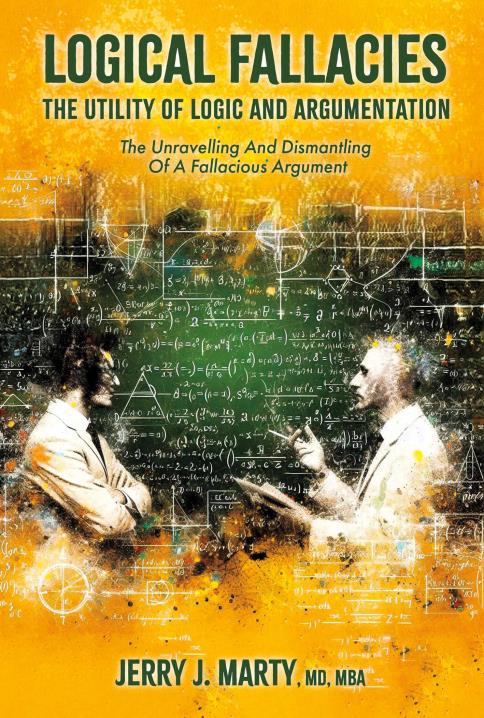
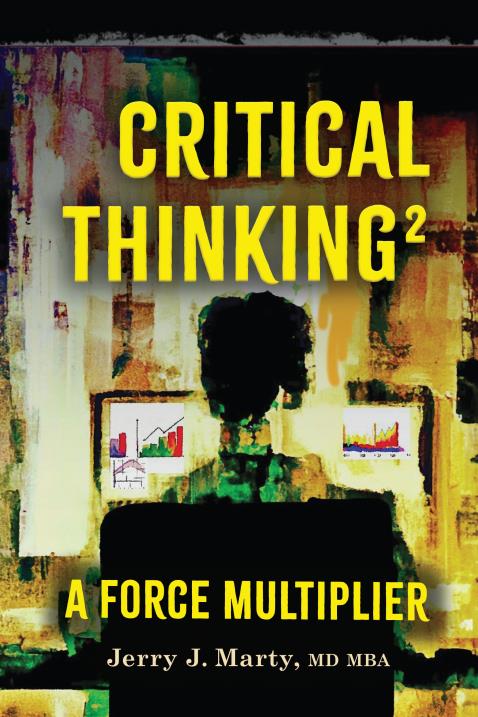
The current work, Reasoning: The Integrative Model Plus Glossary (2026), weaves together an integrative framework for reasoning and complements the author's previous works: Critical Thinking2 - A Force Multiplier (2024) (a foray into how individuals discern, influenced by heuristics and biases, and cognitive phenomena that shape the human experience), followed by - Logical Fallacies, the Utility of Logic and Argumentation (2024) (evaluating and acting upon evidence, particularly information and facts, as distinguished from errors, misinformation, disinformation, and gaslighting), and, Reflecting on the Mind: Psychological Effects, Behavioral Laws and Cognitive Phenomena (2025) (lessons on how to model, and design systems around cognitive limitations – particularly to predict and anticipate action) - representing a journey from Critical Thinking to Logic and Argumentation, to Cognition, and finally, Reasoning.
Individuals seeking structured approaches to reasoning that embrace observation, analysis, evaluation, deliberation, and judgment before decision-making will benefit from its study. Reasoning emerges as a multi-level, multi-faceted cognitive process — constrained by the realities of uncertainty in a milieu of complexity. A unifying principle underlying this book is reflexivity, the process of critically examining one's own heuristics and biases, assumptions, beliefs, logic, and experiences, as well as how these might influence perspective and behavioral action. In that recognition lies the sagacious construct of applied rationality.
This book is a primer that integrates epistemology, cognitive science, and decision science and theory into a comprehensive mesh framework for rational inquiry and thought, reflecting an exposition of structured approaches to reasoning and the eventual evaluation of evidence. Focusing on reasoning, decision frameworks, and evidence-based epistemic practice, the work bridges theory with methodological application. The formatting for chapters One through sixteen includes chapter abstracts strategically located at the beginning of each to summarize key theoretical and practical considerations, their previews, and their significance. Each chapter advances the discussion of Reasoning and the integration of epistemology, cognition, decision science, and theory - all of which impact the contemporary frontiers of artificial intelligence (AI).
The Epilogue presents a classification of cognitive phenomena by functional hierarchical level.
The Postscript presents artificial intelligence AI): Where Art Thou, And Where Goest Thou? - Following is an extended commentary about quantum computing and where it is all heading.
The Appendix section presents useful exercise datasets, topic-specific questions, URL sources, and supplementary materials.
The Addendum formulates a conceptual mathematical model of the modern Philosophy of Science and reasoning theory, and additionally provides selected basic equations and formulas in reasoning.
The Case Studies listing, organized by chapter, presents 18 informative, stimulating, and instructive cases.
Resources (cross-disciplinary and annotated) are provided with brief descriptions and summaries of key sources, assisting the reader in understanding their content and value and in assessing their relevance.
The combination of subjects and topics presented maintains thematic coherence and complementarity with the author's previous works.
Read more