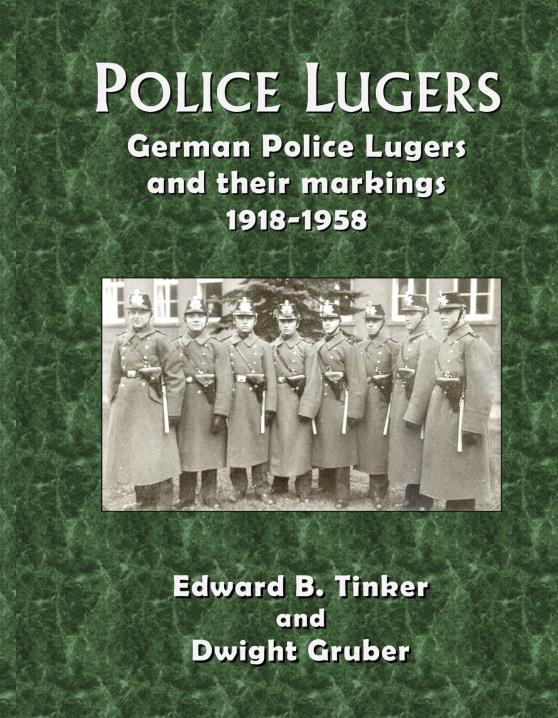

- Genre:history
- Sub-genre:Military / World War II
- Language:English
- Pages:160
- Hardcover ISBN:9780985833534

See inside
Book details
Overview
Covers Luger tools from all the manufacturers, to include DWM, Erfurt, Simson, BKIW, Mauser, Krieghoff and the DDR tools, plus some miscellaneous makers. Covers how they are made, German rules and regulations from 1904 to 1942.
Read moreDescription
Covers Lugers tools from all the manufacturers, to include DWM, Erfurt, Simson, BKIW, Mauser, Krieghoff and the DDR tools, plus some miscellaneous makers. How they are made, German rules and regulations from 1904 to 1942.
The Schraubenzieher (German for screwdriver), more commonly called a "Luger loading tool" by most American and English-speaking collectors, has several important uses—some obvious and others not:
1. Magazine reloading tool – enables a magazine to be much more easily loaded than "by hand."
2. Use the screwdriver end to remove/tighten the grip screws.
3. Use the screwdriver end to help remove/reinstall the firing pin retainer.
Early 1900s U.S. Advertisement for Luger P.08 Pistols
Although tools were always issued with military Lugers, we are unsure whether commercially purchased Lugers came with a tool. For example, Lugers imported into and sold in the United States in the early 20th Century typically came with an option to buy a tool at the same time, but that were not automatically included with the pistol.
A wide combination of Luger tools can be found with police Lugers, as they used Lugers and tools from the Great War I (WW1), Weimar era, and then the Third Reich. As for Luger holsters, there is always a chance a collector will find period tools with period Lugers, as Imperial tools (1871–1918) can be found with Weimar Republic (1918–1933) or Nazi (1934–1945) era pistols in almost any combination. But again, all newly ordered/delivered government P.08 purchases would include a period-correct Luger tool.
Very early Luger tools were originally not marked, and the first tools are commonly called "long neck" tools were made by Deutsche Waffen und Munitionsfabriken Aktiengesellschaft (translates to "German Weapons and Munitions public limited company;" hereafter DWM) but not marked.
At some point, DWM started making Luger tools around 1910. These early tools were marked with a lobed crown and a capital letter on each tool while commercial tools remained unmarked. It is important to emphasize that Luger tool markings are certification and acceptance stamps by specific Army/military inspectors (i.e., same principle as firearm proof and acceptance marks)—not a requirement by the Luger manufacturer such as DWM or Königliche (or Staatliche) Gewehrfabrik Erfurt (translates to "Royal Rifle Factory Erfurt;" hereafter Erfurt). As part of the arrangement of Lugers being produced by the government arsenal at Erfurt for production, loading tools were made for every Luger they produced. Because Erfurt tools were not made for commercial sales, practically all Erfurt tools were marked.
Weimar and Mauser era Luger tools followed the same pattern: military and police were marked while commercial tools were not marked.
Read more