

- Genre:philosophy
- Sub-genre:Epistemology
- Language:English
- Pages:296
- eBook ISBN:9798317840136
- Paperback ISBN:9798317840129
Book details
Overview
This curated compilation of Quotes by Great Thinkers And Philosophers spans the Ages.
This book is a companion volume to the author's most recent work, Reasoning: An Integrative Approach (2026), but can stand alone on its own merits. The Quotes impart wisdom whose intellectual scope extends from individual cognition to collective knowledge, encompassing biases, heuristics, beliefs, and evidence assessment. The insights gained from their study extend to systems thinking tempered by ethics and morality. Reasoning is at the core of this referenced material, as well as the challenges of understanding complexity and uncertainty states, mirroring the companion work and remaining cogent across this epistemic landscape.
The quotes bear especially upon cognitive psychology, classical philosophy, modern epistemology, decision science, and systems theory.
The broad Quote rubric categories are:
1. The Nature of Reasoning and Knowledge; 2. Evidence Assessment, Methodology, and Decision-Making, 3. Cognitive Bias and Human Rationality, 4. Systems, Complexity, and Collective Reasoning.
The Quotes are sorted and organized by the above-mentioned categories, not by relevance, impact, or other criteria. Each Quote is accompanied by a concise interpretative comment that links it to the companion book's central themes and subthemes, especially reasoning and epistemology.
The included biographical synopses of the Quotes' originators (ranging from musicians to sports figures to scientists and to philosophers) in Section One are attributions for the classic Quotes enumerated; they imbue historical provenance, their experiences, educational accomplishments, and the sources' background, breathing life and context, infusing contextual meaning into the Quotes' essence. This Section uniquely outlines the Operational Signatures (Reasoning profiles or structures) of each of the Great Thinkers. Functionally, this is a virtual "second layer" or overlay to the biographies, adding yet more depth
Read moreDescription
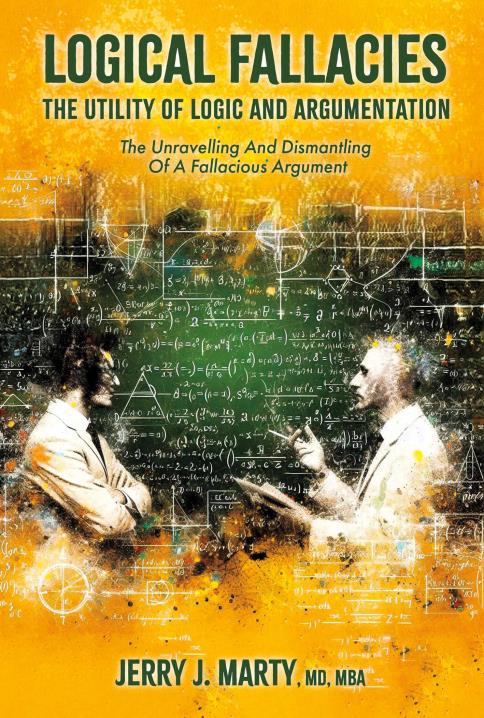
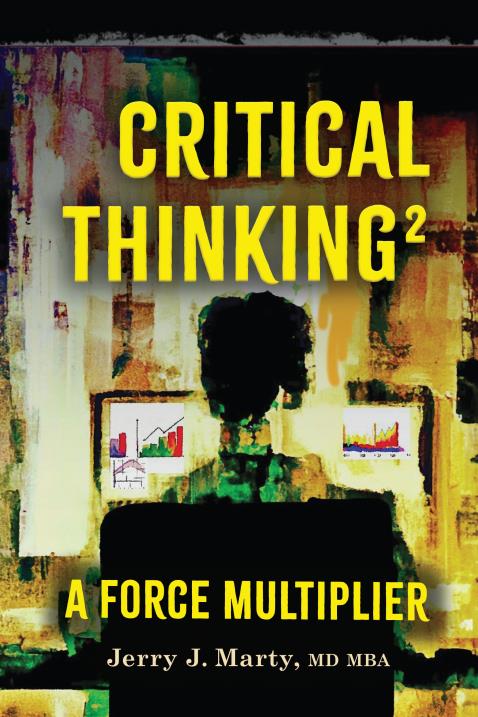
The current book is an accompaniment and resource to the current work, Reasoning: The Integrative Model Plus Glossary (2026), weaving together an integrative framework for reasoning which complements the author's previous works: Critical Thinking2 - A Force Multiplier (2024) (a foray into how individuals discern, influenced by heuristics and biases, and cognitive phenomena that shape the human experience), followed by Logical Fallacies, the Utility of Logic and Argumentation (2024) (evaluating and acting upon evidence, particularly information and facts, as distinguished from errors, misinformation, disinformation, and gaslighting), and, Reflecting on the Mind: Psychological Effects, Behavioral Laws and Cognitive Phenomena (2025) (lessons on how to model, and design systems around cognitive limitations – particularly to predict and anticipate action) - representing a journey from Critical Thinking to Logic and Argumentation, to Cognition, and finally, Reasoning.
Individuals seeking structured approaches to reasoning that embrace observation, analysis, evaluation, deliberation, and judgment before decision-making will benefit from its study. Reasoning emerges as a multi-level, multi-faceted cognitive process — constrained by complexity and the realities of uncertainty.
This book parallels the author's primer on Reasoning, presenting a comprehensive structural lattice for understanding rational inquiry and thought, and reflects an exposition of approaches to reasoning and the evaluation of evidence. Resources assist the reader in understanding their content and value and in assessing their relevance. The combination of subjects and topics presented maintains thematic coherence and complementarity with the author's previous works.
The anthologized Quotes in Section One of this current work offer insights and sage wisdom on reasoning, as exemplified by the forty curated Quotes that trace the intellectual and thematic landscape of this book. The output represents an amalgamative reflection on what constitutes the rich tapestry of reasoning. There are Quotes by Socrates and Aristotle, while the majority are from the Age of Enlightenment (from the late seventeenth to the eighteenth century) through to the modern period.
The manuscript is divided into:
Section One: BIOGRAPHICAL SKETCHES of the Quotes' originator.
Section Two: META-LEVEL EPISTEMIC DIAGNOSTIC AND COMPARATIVE FRAMEWORK (MEDCF) – is a unique Section that examines the selected Great Thinkers with particular attention to the integration of Reasoning and Logic, subdivided into the subcategories of: 1. Reasoning Profile (Cognitive Signature), 2. Argument Schematic (Formal Structure), 3. Epistemic Failure Modes, 4. Modern Formal Translation, 5. Applied Use Cases, and 6. Complexity Index (Heuristic Index). This Section uniquely outlines the Operational Signatures (Reasoning profiles or structures) of each of the Great Thinkers. Functionally, this is a virtual "second layer" or overlay to the biographies, adding even more depth to the authorship. Section Three: GLOSSARY - Philosophy of Science Resources provides meaning to the structural foundation of the epistemological field, especially its scope and major definitions. Resources assist the reader in understanding their content and value and in assessing their relevance. The Philosophy of Science is a branch of philosophy that critically examines the foundations, methods, assumptions, and implications of rational inquiry. It seeks to clarify how scientific knowledge (epistemology) is generated, justified, and revised (updated), as well as how it relates to truth, beliefs, reality, and justification-explanation. Central concerns include the nature of scientific theories and axiomatic principles, the structure of evidence, the role of its assessment, and, finally, model dynamics.
The combination of subjects and topics presented maintains thematic coherence and complementarity with the author's previous works.
Read more