
As a young child growing up in West Texas, my active imagination kept me entertained most of the day and often well into the night. Lying in bed, I recalled the events of the day and created stories around the details and the people involved, embellishing both story and characters, building plots that interested and entertained me.
Before I learned the alphabet and how to print, I regaled my maternal grandmother with stories of my adventures in her backyard. By high school, I had developed a passion for creating stories. However, academic responsibilities, involvement in sports, and an active social life, unfortunately limited my writing time and many of the plots and characters resided only in my mind. I gained a renewed interest in writing my first year in college where I majored in pre-law with a minor in journalism. Even though many people told me that writers always die poor, I still wanted to develop proper writing skills and figured journalism classes would help hone my craft.
The Vietnam Conflict had taken a dramatic turn in 1965 when the federal government doubled the monthly draft quotas to 35,000 for all young men eighteen and older. The only exemptions were college deferments and family connections. Many college-aged men were involved in that conflict, one way or another and I was no exception. For the next several years, I once again pushed writing stories aside but managed to slake my passion by composing poetry.
By the late sixties, the American public had grown weary of the Vietnam debacle, but a greater storm brewed with an increasing level of polarization sweeping across America. Both sides of the issue invested much time and energy in presenting their perspectives of the war. The party in charge of Congress spent countless resources on focusing public attention on the importance of winning that conflict, covering up horrifying details of atrocities, and squelching anti-war rallies.
Somehow, our nation held together and survived, but not without deep gashes in our social fabric—some of which have never healed. Wounded and vulnerable, yet determined, American society moved on. At the time, I suspected that a subtle paradigm shift in our political and economic institutions had created a rift among the social strata in America that could only widen with time and usher in an onslaught of divisiveness that would eventually get way out of control. On the other hand, I suspected that perhaps I was just a twenty-one year old kid with an over active imagination and decided, it was not something I needed to worry about.
After serving in the U.S. Navy, I went back to college and began to build a work career in the retail business to support myself and my expanding social life. Soon after school started that fall, I found myself looking across a classroom into the eyes of a woman who has held my undivided attention for fifty-four years. Rebecca and I often recall our first meeting and agree that what we felt was the proverbial love at first sight phenomenon.
Six years after we were married and Rebecca had established herself as a much loved and respected high school language teacher, we decided that I should go back to college. Four years later, we started a family. After two sons, a bachelor’s degree in Sociology and advanced courses in Social Psychology, I became a teacher. Going back to college, especially the graduate level courses, provided the opportunity to rekindle my love of writing. However, graduate school and teaching offered few opportunities for working on personal long-term writing projects. I relegated bits and pieces of short stories and poems to notebooks, eventually filling numerous bankers’ boxes.
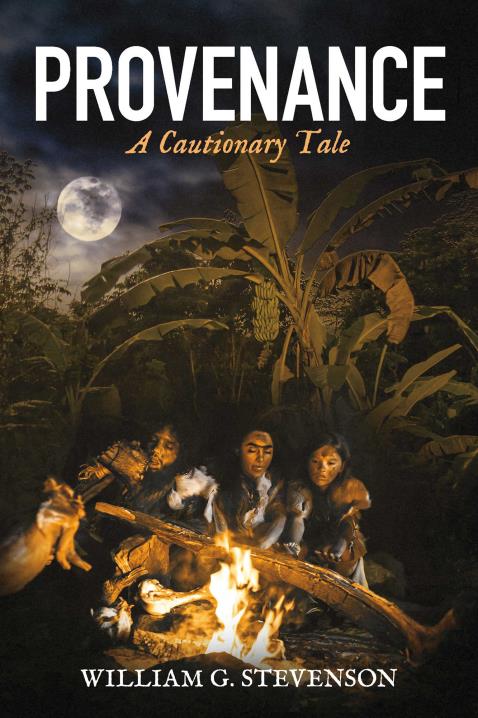
After twenty-six years of teaching, I retired. That summer, as Rebecca and I drove to Oregon to visit our sons, I told her I needed something productive to do to fend off boredom. I told her I was thinking about working part-time at Home Depot. She suggested instead that I finish writing one of the books I started forty years ago. Over the remainder of that summer, we constantly had lengthy brainstorming and note taking sessions pulling together an outline. When fall arrived and Rebecca went back to her classroom, I began writing.