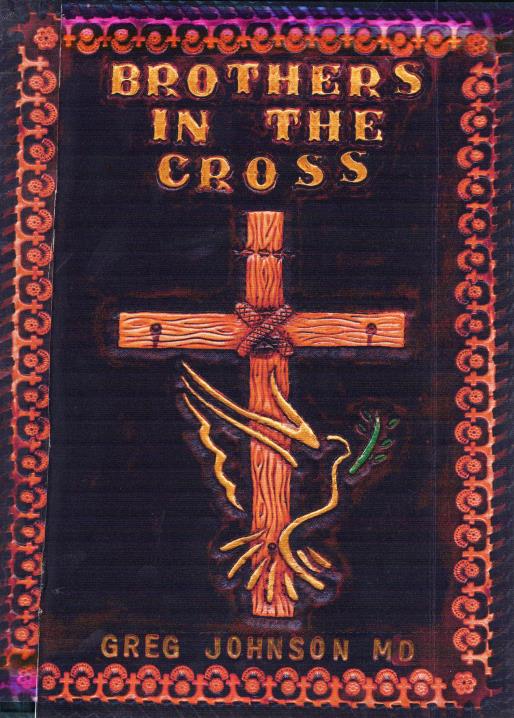

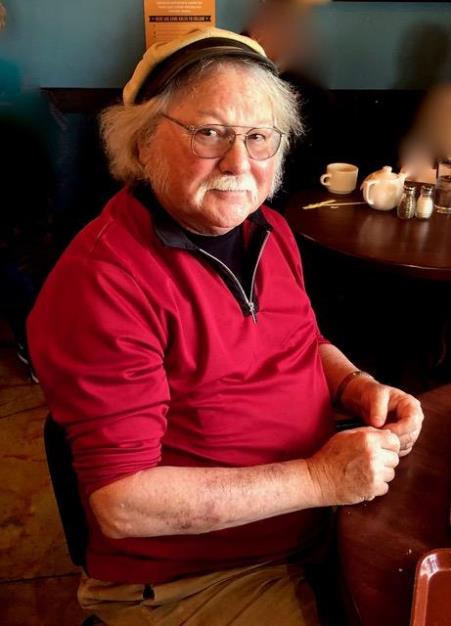
Brothers in the Cross is my introduction to publishing to the public, and my only work of historical fiction. It is my second book, though my first, Tales from Bedside Manor, a non-fiction memoir of the most memorable cases in my fifty-year medical career, was written for my family and close friends and not released for sale or distribution.
I wrote Tales from Bedside Manor to preserve in short stories the ironies and bittersweet memories of life as an Internist (Internal medicine: a pediatrician for adults). It was to leave to my family a taste of what those experiences had been like. My health was faltering, major irreversible coronary disease intruded soon overlaid by cancer. I could see the light at the end of the tunnel drawing closer, and wanted to leave my mark. That was in 2010, Obamacare was adopted and physician directed primary care medicine began to die.
Writing Brothers in the Cross was different. Since childhood I held a fascination with stories of the Holy Land. I was the questioning sort and the glib answers of true believers were never quite convincing enough for me. I wanted to believe, but I wanted to be convinced by something beyond blind faith. So I tuned my ears for discoveries that evolve with time and was rewarded by nuggets of insight that arose in random fashion over the years.
And then the threads connected. I was musing one evening and recalled the story of Dolly the Sheep and her cloning in Scotland. Furthermore, there had been articles about rogue doctors cloning human children in Korea and mainland China. That was the epiphany that sparked my leap to consider what would happen if The Holy Cross of Jesus was found. What men with technology would do in such an eventuality was never in question.
The book would write itself. Research required only confirming the facts that had accumulated over time. The most obvious indisputable source for Christ’s genes would be the fatal Cross. The most obvious hiding place for the Cross would be very near Jerusalem. Simon of Cerene was the man who had carried it to the crucifixion, so he was present when the Cross was unburdened. The surrogate Mother would also be a Mary (Mariam is its Arabic translation). The Bible’s Book of Revelations would introduce an alter-ego, the Anti-Christ. Armageddon would pre-suppose a nuclear end. The declining viability of my primary care practice convinced me to assume the role of Chief of Occupational Health at White Sands Missile Range where I became acquainted with real nuclear accidents including the Demon Core incidents at Las Alamos National Laboratory. So I wrote the book. I don’t have any plans to write another, but stranger things could happen. Greg Johnson MD