
About the Author
Author Info
Craig Smith and Emmanuel Music Inc.
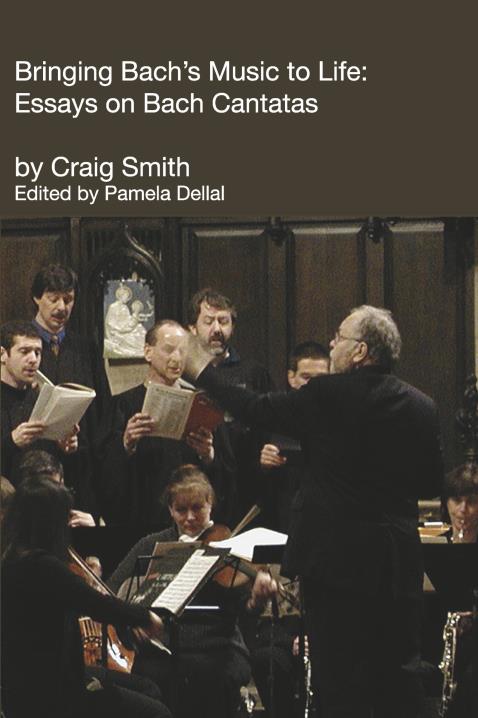
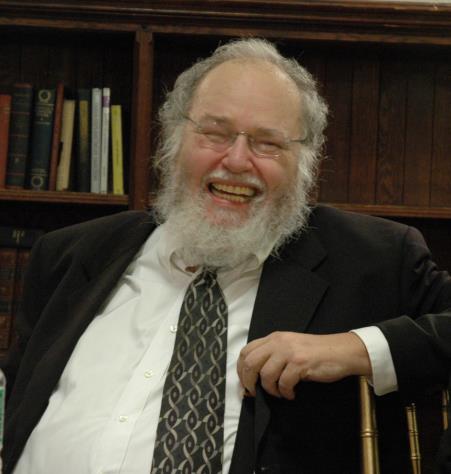
Craig Smith (1947-2007) was the founder and first director of Emmanuel Music Inc., ensemble-in-residence at Emmanuel Church in the City of Boston since 1970. Craig was born in Lewiston, Idaho, and studied piano from the age of four in Lewiston and later at Washington State University. He came to Boston in 1967 to study piano with Russell Sherman. After joining the Emmanuel Church choir as a tenor, he soon took over as choir director. On his first Sunday in that role, he brought along a group of friends to perform a Bach cantata in the liturgical context for which it was written. Before long, the Bach cantatas became a regular feature of Sunday worship at Emmanuel, Smith’s career as a pianist faded into the background, and he became the world-renowned leader of an incredible group of musicians – singers and instrumentalists – who to this day continue his tradition at Emmanuel Church. Smith drew outstanding young musicians to work with him, believing that “the works of Bach in particular are the best training for the musician's technique and soul.” Young musicians work week after week with those more experienced, creating what Smith called “‘an Emmanuel style’ recognizably different from the usual sight reading of the music.”
Emmanuel Music, Inc. (EMI) was incorporated in a period of its history when chaotic didn’t begin to describe it as an organizational entity. There was a music director, Craig Smith; a cadre of musicians gathered each Sunday to play and sing a Bach cantata. For about a decade, that was it. There was no executive director, no board of directors, no office staff (in fact, there was really no office) or development director. All that changed in the early 1980s, when Leonard Matczynski, a violist in the orchestra, volunteered to be executive director, established EMI’s first board, and applied for a Chamber Music America grant to support a series of Sunday afternoon chamber concerts in the Emmanuel Church parish hall. Smith held two part-time positions: artistic director of Emmanuel Music and music director of Emmanuel Church, an arrangement that prevails today.
In 1981, Smith conducted a performance of Handel’s Saul with the Cantata Singers’ chorus and EMI instrumentalists and soloists, staged by Peter Sellars, then a Harvard undergraduate, at Harvard’s Sanders Theater. That was the beginning of a collaboration among Smith and Sellars and Emmanuel Music that eventually included the widely acclaimed staging of Handel’s Orlando at the American Repertory Theater in Cambridge; the three Mozart/DaPonte operas (Don Giovanni, Le Nozze di Figaro, and Cosi Fan Tutte), presented at the Monadnock Festival, in Boston, Paris, and Barcelona, and televised by PBS; and Handel’s Giulio Cesare in Egitto, video recorded by Decca in 1990. Among the world-renowned singers whose careers were spawned by Emmanuel Music are Jeffrey Gall (countertenor), James Maddalena (bass-baritone), Susan Larson (soprano), Sanford Sylvan (baritone), and the late Lorraine Hunt Lieberson (mezzo-soprano), who began her affiliation with EMI as a violist in the orchestra.
As guest conductor at the Théâtre Royal de la Monnaie in Brussels, Belgium, Smith worked with Mark Morris on the premiere of Morris’s L’Allegro, Il Penseroso, ed Il Moderato in 1988. In spring of 1989, Smith conducted the premiere of Morris’s Dido and Aeneas at the Monnaie with the orchestra, chorus, and soloists of Emmanuel Music. Over the years, the EMI ensemble has performed for Morris’s Gloria (Vivaldi) and Jesu, meine Freude (Bach) in various venues, as well as providing smaller vocal and instrumental groups for such pieces as Love Song Waltzes (Brahms) and Polka (Lou Harrison).
But it was still the cantatas and passions of Bach that were at the heart of Smith’s musical life. He was the first in the United States to perform the complete cycle of cantatas, and it was particularly important to him that they be part of the liturgy, not concert performances. To Smith’s mind, presentation of the cantatas in their proper context added depth and meaning to the music’s message and purpose. It is what Bach did in his time, and it is what Emmanuel Music continues to do year after year.
Bach believed that his cantatas were sermons that could effect the conversion of the listener’s heart. Smith was a modern exemplar of that belief: he had a passion for the performance of these works with integrity and faithfulness to the composer’s vision, believing that such performance could change the world and people’s lives. In the context of Emmanuel Church’s liturgy, Craig’s belief has been proven over and over again during the past 45 years: a survey of the congregation several years ago showed a large number of parishioners who came for the music, heard something compelling in the cantatas and the deep spirituality expressed in them, and stayed for the community that supports that spirituality.
Since Smith’s death in 2007, his vision has been preserved and extended by the new Artistic Director, Ryan Turner, who was appointed to the position after being a singer in the ensemble for many years.