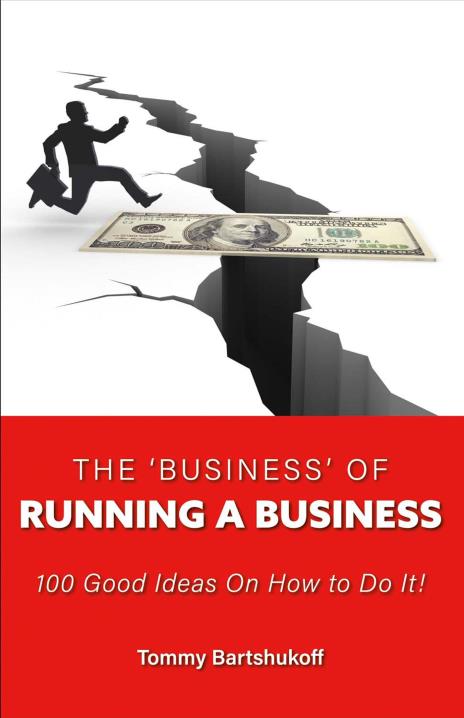


- Genre:business & economics
- Sub-genre:Strategic Planning
- Language:English
- Pages:58
- eBook ISBN:9798317850067
Book details
Overview
This book is not intended as a leadership textbook. It is a conversation about observations, questions, stories, warning signs, opportunities and practical judgement. Some parts may confirm what you already know. Some may challenge your thinking. Some may simply make you smile because you recognise the situation immediately.
That is perfectly fine.
My hope is simple.
I hope this book helps you become more curious about what is really happening inside organisations, including your own. I hope it helps you see a few warning signs earlier and recognise a few opportunities before they disappear.
And perhaps most of all, I hope it encourages you to ask better questions.
Because better questions often lead to better judgement.
And in a world where change is accelerating and much of what matters remains invisible, judgement may be one of the most valuable assets we have.
Read moreDescription
Why This Book Exists
One thing that has always interested me is why some organisations feel alive while others somehow become heavy.
The people may be just as intelligent. The market may be attractive. The strategy looks sensible on paper, the ambition sounds convincing, and the financial reports do not immediately suggest trouble. Yet when you spend time inside the organisation, something feels different.
People are careful. Meetings take place, but the real conversation somehow avoids the centre of the issue. Decisions are made, yet progress feels slower than it should. Nobody has necessarily done anything wrong, but the energy has changed.
I have seen this in different countries, industries and cultures. The details vary, but the feeling is often familiar. People know more than they say. Good ideas exist, but they do not always travel. Problems are visible to some people long before they become visible to the top.
Perhaps you have seen this yourself.
You sit in a meeting and have the feeling that several people know what really needs to be discussed, but nobody quite says it. The presentation continues. Sensible words are exchanged. People nod, actions are agreed, and everyone leaves looking reasonably professional. Then afterwards, perhaps over coffee, in a corridor or on the way to the airport, somebody says what should probably have been said in the meeting.
That gap has always fascinated me.
Not because it is dramatic, but because it is so common. Organisations rarely lose clarity in one big moment. More often, clarity leaks away quietly. People learn what is safe to say, what is better left alone, and where honesty may create more trouble than it is worth. After a while leadership still receives information, but not always reality.
That becomes expensive.
Not always immediately, but eventually.
Many organisations spend enormous energy discussing what is easy to measure while some of the things that truly shape future performance remain almost invisible. Trust is one example. You know when it is there and you certainly know when it has weakened, but it rarely appears clearly in a financial report. The same is true for judgement, curiosity, ownership, openness, courage and the willingness to challenge poor thinking before it becomes an expensive habit.
These things may sound soft, but their consequences are not.
In fact, the majority of the value of modern companies now sits in assets that are difficult to see and often difficult to measure. By some estimates, more than 90% of the value of the S&P 500 is linked to intangible assets and capabilities. Yet much of management attention still focuses on the smaller visible portion because it feels easier to discuss.
A company can have good products and still become slow. It can have intelligent people and still make poor decisions. It can have a strong brand and still lose confidence. It can proudly believe it is number one because the competition appears in the rear-view mirror, while forgetting that the competitor may be behind because it is already one lap ahead.
The world is not becoming slower or simpler. Technology moves quickly. Competition changes shape. Artificial intelligence gives us extraordinary speed and reach, but it also creates a new responsibility. Used well, it can help us think, challenge ideas and explore possibilities faster than ever before. Used lazily, it can also make us less willing to think for ourselves.
The more capable our tools become, the more important judgement becomes.
I have no interest in standing in front of the AI train waving a flag and shouting stop. If the train is going somewhere interesting, jump on.
But keep the bicycle.
The bicycle is balance, judgement, direct contact with reality, and the freedom to stop, look around, listen and change direction when something does not feel right.
That is also leadership.
Not the theatrical version of leadership, but the practical one.
The ability to move without becoming blind. To listen with
Read more