

- Genre:body, mind & spirit
- Sub-genre:Ancient Mysteries & Controversial Knowledge
- Language:English
- Pages:200
- eBook ISBN:9798317837105
Book details
Overview
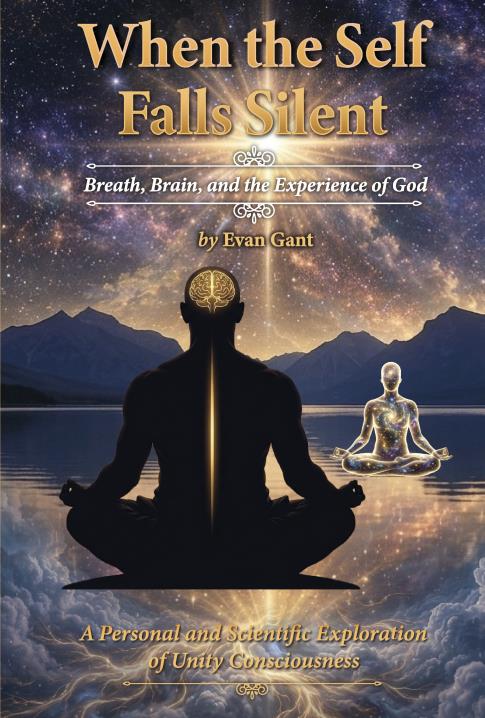
In the teachings of A Course in Miracles, the book traces the evolution of human awareness and the emergence of the ego as both a necessary structure and a fundamental illusion.
Through a synthesis of neuroscience, contemplative practice, and spiritual philosophy, the reader is guided into a deeper understanding of the "limbic loop"—the conditioned patterns of thought and emotion that shape identity and perception. These patterns, while essential for survival, often obscure a more expansive field of awareness that lies beyond habitual thinking.
At its core, this work is not merely theoretical. It offers a path of direct experience, integrating Transcendental Meditation, breathwork, and inner inquiry as practical tools for quieting the mind and loosening the grip of the ego. As these layers begin to soften, a shift in perception becomes possible—one that reveals a deeper coherence, presence, and sense of unity.
Transfiguration ultimately invites the reader into a process of awakening: a movement from identification with thought to the recognition of awareness itself. In doing so, it points toward what many traditions have described as the inner light—an ever-present ground of being that exists prior to, and beyond, the constructed self.
Read moreDescription
Transfiguration: A Journey to the Inner Light is a profound exploration of consciousness that weaves together philosophy, neuroscience, and spiritual insight into a unified vision of human awakening. At its heart, the book examines the emergence of the ego—how it forms, how it sustains itself, and how it may ultimately be transcended.
Drawing from the timeless philosophy of Plato, the narrative begins by examining humanity's long-standing struggle to distinguish appearance from reality. From there, it moves into a contemporary understanding of the mind, introducing the concept of the "limbic loop"—a self-reinforcing cycle of thought, emotion, and identity rooted in the brain's survival mechanisms. While this system once served an evolutionary purpose, it now often confines perception, shaping a fragmented sense of self and world.
The book then bridges into both historical and modern explorations of consciousness, engaging the insights of mystics, philosophers, and contemporary thinkers. Special attention is given to A Course in Miracles, whose psychological and spiritual framework offers a powerful lens through which to examine the ego's illusions and the possibility of a transformed perception grounded in unity rather than separation.
Yet Transfiguration is not merely an intellectual inquiry—it is a practical guide. Through the integration of Transcendental Meditation, breathwork, and contemplative self-inquiry, the reader is invited into direct experience. These practices are presented not as abstract disciplines, but as living tools that quiet the mind, regulate the nervous system, and open access to deeper states of awareness.
As the layers of conditioned identity begin to soften, the book points toward a fundamental shift: from identification with thought to the recognition of awareness itself. This shift is described as a form of inner transfiguration—a reorientation of perception in which the boundaries of the ego dissolve, revealing a more coherent, peaceful, and interconnected reality.
Ultimately, Transfiguration: A Journey to the Inner Light offers both a map and an invitation. It speaks to those who sense that the self they have taken to be real is only a partial truth, and that beyond it lies something vast, luminous, and profoundly transformative. Through careful synthesis and grounded practice, the book guides the reader toward that realization—not as belief, but as lived experience.
Read more