

- Genre:history
- Sub-genre:Military / United States
- Language:English
- Series Title:Veterans in Crisis
- Series Number:3
- Pages:560
- eBook ISBN:9798992766912
Book details
Overview
"Widespread, horrific trauma impacted millions of Americans because of the American Civil War – the exceptionally violent period in American history that spans the lifetime of the notorious outlaw, Jesse James, 1847 to 1882.
The effects of combat trauma and PTSD molded Jesse James and countless numbers of other Civil War soldiers. This volume of our "Veterans in Crisis" series of PTSD books includes a psychological profile and PTSD analysis of Jesse James and other members of the brutal James-Younger gang that was defeated in Northfield, Minnesota on September 7, 1876.
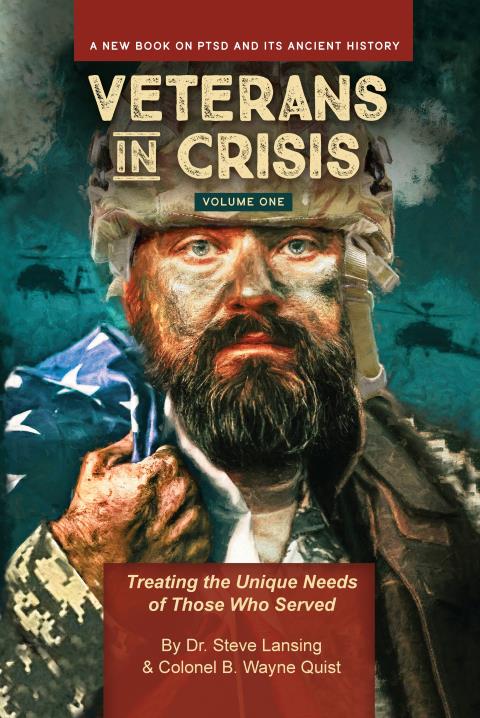
In 2024 we published the first two volumes of our "Veterans in Crisis" series on post-traumatic stress disorder (PTSD). In Volume Three, we provide a unique overview of the impact of PTSD on both Jesse James and an entire generation of Americans, North and South, from the devastating terror and trauma of Civil War brutality and violence. We also clarify facts and issues surrounding the shooting and subsequent death of Swedish immigrant Nicolaus Gustafson.
This book is the story of the James-Younger gang and the Northfield bank robbery from the perspective of the Millersburg Swedes, and the impact of post-traumatic stress disorder (PTSD) on Jesse James and an entire generation of Civil War veterans, North and South. The book distills reams of data from the fiction, legend, mythology, and often neglected facts surrounding the exploits of Frank and Jesse James, Cole Younger, and the murderous James-Younger gang.
Nearly all gang members experienced exceptionally violent trauma beginning as teenagers and extending throughout their criminal lives. The impact of PTSD on an entire generation of Americans during the violence of the American Civil War is addressed throughout this volume because it is virtually certain Jesse James and members of the gang suffered from severe, complex PTSD as revealed in distinct symptoms often cited in the voluminous literature.
PTSD as a clinical diagnosis was unknown a
Read moreDescription
"Widespread, horrific trauma impacted millions of Americans because of the American Civil War – the exceptionally violent period in American history that spans the lifetime of the notorious outlaw, Jesse James, 1847 to 1882.
The effects of combat trauma and PTSD molded Jesse James and countless numbers of other Civil War soldiers. This volume of our "Veterans in Crisis" series of PTSD books includes a psychological profile and PTSD analysis of Jesse James and other members of the brutal James-Younger gang that was defeated in Northfield, Minnesota on September 7, 1876.
In 2024 we published the first two volumes of our "Veterans in Crisis" series on post-traumatic stress disorder (PTSD). In Volume Three, we provide a unique overview of the impact of PTSD on both Jesse James and an entire generation of Americans, North and South, from the devastating terror and trauma of Civil War brutality and violence. We also clarify facts and issues surrounding the shooting and subsequent death of Swedish immigrant Nicolaus Gustafson.
This book is the story of the James-Younger gang and the Northfield bank robbery from the perspective of the Millersburg Swedes, and the impact of post-traumatic stress disorder (PTSD) on Jesse James and an entire generation of Civil War veterans, North and South. The book distills reams of data from the fiction, legend, mythology, and often neglected facts surrounding the exploits of Frank and Jesse James, Cole Younger, and the murderous James-Younger gang.
Nearly all gang members experienced exceptionally violent trauma beginning as teenagers and extending throughout their criminal lives. The impact of PTSD on an entire generation of Americans during the violence of the American Civil War is addressed throughout this volume because it is virtually certain Jesse James and members of the gang suffered from severe, complex PTSD as revealed in distinct symptoms often cited in the voluminous literature.
PTSD as a clinical diagnosis was unknown at the time, but companions of Jesse James and others who observed and recorded his violent, destructive, psychotic, and sociopathic behavior lead to the undisputed conclusion that PTSD was a major factor in the violent conduct of Jesse James and the James-Younger gang in the years following the American Civil War and settlement of the American West.
"
Read more