

- Genre:history
- Sub-genre:Women
- Language:English
- Pages:444
- Paperback ISBN:9798317851835
Book details
Overview
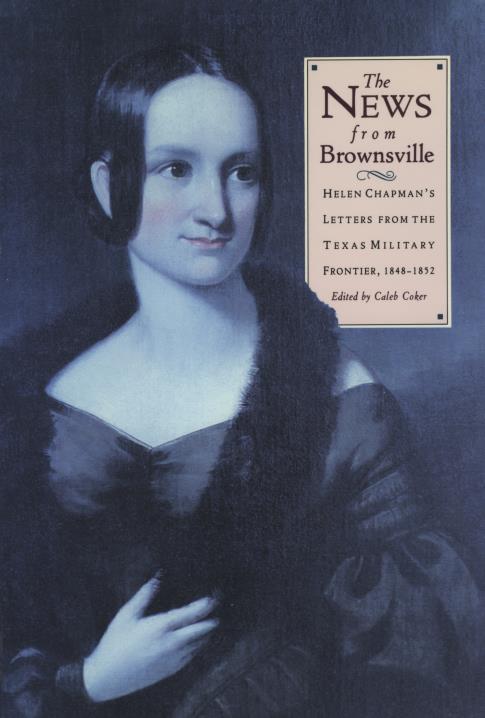
The News from Brownsville is a rare and remarkable collection of letters written by Helen Chapman, the wife of a U. S. Army officer and West Pointer, William W Chapman, during her first five years on the South Texas Frontier from 1848-1852. Helen Chapman and her husband William, the first quartermaster at Fort Brown, were two influential founding citizens of Brownsville, Texas. As a well-educated, insightful and thoughtful New Englander writing primarily to her mother, Helen Chapman shares her frontier experiences with an intimacy and candor that clearly reveals the frontier experience and social conditions along the Rio Grande as the area becomes part of the state of Texas at the end of the War with Mexico. These vivid letters from Brownsville express thoughtful and forthright opinions on a wide range of topics: women's roles on the frontier, childcare and diet, slavery and temperance, and the relationships between Texans and Mexicans in the new state of Texas. Readers interested in the history of the military, Texas and the Southwest, women and minorities, scandals and desperados, and domestic life on the frontier will find this book to be an invaluable addition to the literature of the American experience.
The editor, a fifth-generation descendant of the Chapmans, drew these letters from and extensive collection of family papers dating from the American revolution to the end of the nineteenth century that record the lives of five generations of an American family.
Read moreDescription
In early 1848 as the war between the United States and Mexico was winding down, a well-educated and observant woman, Helen Chapman left her son and her home in Massachusetts to join her husband, William at his duty station in Matamoras, Mexico. As quartermaster under the city's military rule, William was the city's "mayor de facto" and responsible for providing many of its municipal services. During his five-year station on the border, William Chapman was in charge of moving all of the Army's equipment and supplies across the river to what he called the "new'" Fort Brown. Major Chapman was responsible for the purchase of land and the erection of government buildings, the care of thousands of mules and cavalry horses and military stores, the hiring of steamboats, and the contracts for providing a multitude of goods and services to the troops stationed at Fort Brown and along the Rio Grande.
Helen Chapman spent her time in Matamoras and Brownsville in quite different occupations. The border society, its people, and their customs, food, and language were so intriguing to Helen that she opened what soon became a torrent of correspondence to her parents and friends in New England. Her letters reveal that she socialized and entertained frequently during those years. Dealing with a constant stream of visitors, managing a household and its servants, and caring for her family consumed much of her time. When her duties permitted, she found solace in writing and reading as well as studying Spanish. Her letters describe scenes of violence and despair, as well as moments of amusement, fascinating characters, and impressive settings. She expressed forthright opinions on a wide range of subjects which came to her attention, ranging from child care and healthful diet to slavery and temperance to Zachary Taylor's fitness for the presidency and the plight of Mexicans in the new state of Texas. In her letters are tales and vivid descriptions of a noted army express rider, gold seekers, Mexican funerals, an epidemic, a trip to Mexico City, and her own childbirth experience during a battle in the Merchants War. Helen Chapman's correspondence between 1848 and 1852 is a rare and valuable record of her life and the changes occurring in South Texas during this period.
While Helen Chapman was an observant and literate woman, she was also a product of her upbringing and the times in which she lived. Temperance and abolition were subjects often mentioned in her letters. There was much alcohol abuse on the frontier, and its effect on victims, their families, and society was often apparent to one viewing the scene through unglazed eyes. Likewise, her views on abolition derived from her frequent interactions with slaveholders. She developed prescient notions of racism which came from her observations of the enmity that existed between the American and Mexican populations in the fledgling state of Texas. Helen's frontier Texas milieu allowed her to observe firsthand the conflict between two races technically standing in perfect legal equality because of the Treaty of Guadalupe Hidalgo, which ended the Mexican War. Perceiving as early as 1852 that, "The difficulty is in the race," vainly she hoped '"that this dreary hate may be subdued between men who are living side by side as citizens of a common republic." Having reached this understanding, Helen became one of the early advocates for the extension of full civil rights to the Mexican American population of Texas.
Helen Chapman also demonstrated a personal sense of duty toward her new community. She promoted schools, wrote to charitable groups for financial assistance for needy neighbors, appealed to missionary societies for a minister willing to serve Brownsville, and took in foster children. Her letters provide ample evidence of how a woman of the time exercised her moral suasion to improve conditions for the victims, the uneducated, and even the irreligious and intemperate of the Texas frontier.
Read more